Who says you can't be in two places at once? The right cellular camera system will let you keep tabs on your deer woods even when you're nowhere near.
Until we finally crack the code of Star Trek teleportation, we hunters will have to be content with plodding along between places at standard human speeds. Which is no big deal, normally...but it can be when you’re not in the deer woods but are desperate for information on what’s happening there. Then the need for TV’s 23rd century technology to become reality early in the 21st is a tad frustrating.
Ah, but what if we could be in two widely separated places at once? Or close enough to “at once” that a slight lag was no worry at all? That presumably would make a lot of things in life simpler. And yes, whitetail hunting and management would be among those things.
Well, thanks to the ongoing development of cellular scouting cameras, we now are close to bridging this gap. We can in effect be in the deer woods even when we aren’t.
We’ve had stand-alone scouting cameras for over two decades now, and they’re popular. But today’s growing interest in the use of cellular-enabled cameras has sprung from four realities: (1) It takes time and often a fair bit of fuel and effort to physically check any camera; (2) every time you visit a camera site, you risk spooking deer — thus offsetting some of the practical advantage offered by acquiring photos of them in the first place; (3) by the time a camera has physically been checked, even the most recent capture image is likely to be somewhat dated; and (4) if you have trespasser/thief issues, a cellular camera offers better odds of identifying the perpetrator. Add up these facts and it’s easy to see the advantage of being able to monitor a spot in real time, even when you’re not around. The newest approach to doing so comes from the folks at Moultrie. Their app-based cellular camera system - Moultrie Mobile - allows for quick, easy, affordable and disturbance-free camera monitoring, as well as handy storage/retrieval of captured images.
Over the past few weeks I’ve been putting this system through its paces, and it’s performed as advertised. The unit I’ve been using is the XA7000i, which is built around a 20MP camera.
The camouflaged camera and its neutral-tone strap are really hard to see on most trees, which is great. Not only is the camera well hidden from human eyes, I’ve captured no images of deer looking at it during the day or at night. The invisible flash (80-foot range) thus seems to be undetectable by deer. All these attributes are key advantages, in my book.
Of course, stealth doesn’t much matter if the camera won’t reliably capture images. But this one has done so for me. Using the 7000i in a spot that has a fair bit of daytime and nighttime deer activity, I’ve found it captures clear images and lets you see them within only a few minutes of the event.
Easily controlled via a free app on a smartphone - and with extremely affordable service and storage plans - this system seems a solid option for anyone wanting to enter the cellular camera game without first getting an engineering degree. And that’s helpful. Hunting, management and/or security concerns have many folks wanting a better connection to the deer woods. If you find yourself in that situation, give the Moultrie Mobile XA7000i a look. It could open your eyes to more of what’s out there when you’re not — and let you know about it in close to real time.
Most of my duck spots are public, just like most of my bowhunting spots are public. What this means is that a significant portion of my fall is spent on ground open to anyone. And because of that, I've gotten awful good at ferreting out the spots others won't work to get to, or simply don't know about.
Now, that comes with a caveat considering I live in the Twin Cities – there are just some areas where there aren't any secrets left. And if there are enough willing hunters around, a certain percentage of them will work just as hard – or harder – than you to get to the good hunting.
With the playing field leveled in such a way, it becomes a lot more difficult to work around the competition, but not all hope is lost. There are still some ways to hedge your bets while hunting ducks on common ground, but you'll need to plan ahead.
Wednesdays Are Best
The reality is that most of the hunters will be out on Saturday and Sunday. Hunting pressure for ducks – and pretty much all game – flows into full volume on the weekend and ebbs mid-week. What does this mean for you?
Well, you'd better go to your boss and your spouse with your cap in hand and eyes cast downward and plead your case for some time to yourself during the middle of the week. This will do a couple of things for you.
Hunting cameraFirst and most obvious, you'll have fewer sky-blasters out in your spots. The fewer the hunters in your immediate area, the better your hunting will be. Now, there is an argument that more hunters out in general puts more birds in the air, and that is true in certain situations, but it doesn't mean they are going to fly over the public ground you're on. They will, more often than not, suss out as only pressured ducks can, the water where no one is hunting.
This effect, which brings to mind no-hunting refuges with rafts of greenheads flipping off distant hunters, can also push birds into places that can be hunted but just aren't being disturbed currently like public land in the middle of the week. This is the beauty of migrators, because they don't get to know the local hunting pressure the same way resident ducks do. The places these ducks settle are best hunted on a Wednesday or Thursday morning when those lulled-into-a-false-sense-of-security birds are yours for the taking if you can find a few free mornings while the rest of the working stiffs are suiting up and heading to their cubicles and job sites.
Operate Correctly
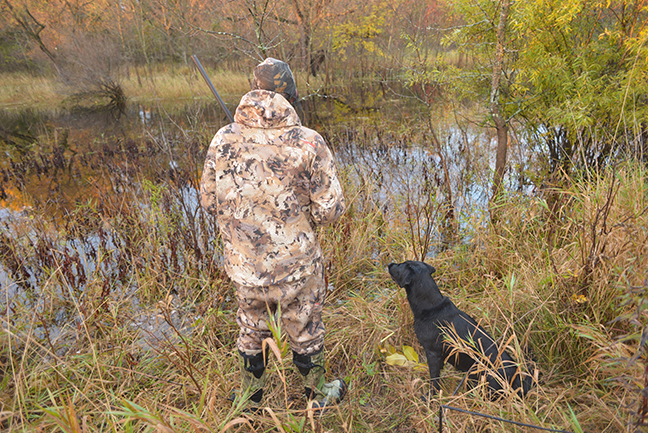
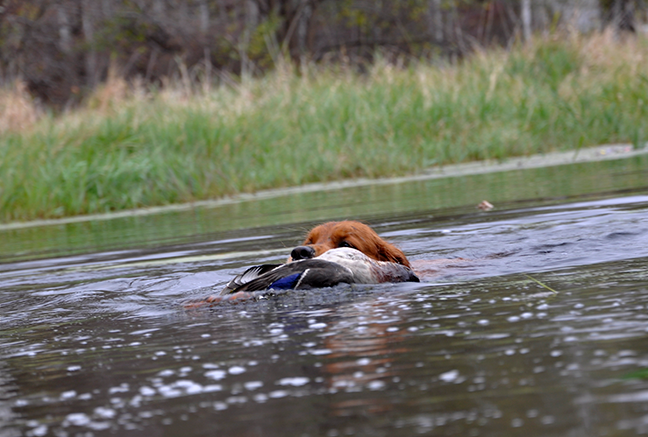
A few years ago, a buddy and I tucked into a wooded berm near some flooded backwaters hoping to catch the last of the wood ducks or a random greenhead passing overhead. We knew the best in our setup was to pass-shoot them as they cleared the treeline and most likely, spotted us. The hope was that it would be too late by the time they figured out their waterhole was being guarded by a couple of dudes holding 12 gauges and an eager black Lab.
We did manage a drake and a hen wood duck in the spot, and we also got to witness what not to do duck-wise. Two hunters had slipped into a pond 400 yards from our setup. Instead of tucking into the brush at the edge and trying to hide, they stood at the top of a hill and sent three shots apiece at any duck within a football field's distance of where they stood.
Even if you get out mid-week, you've still got to figure out the best way to hunt your spots on public. The ducks that cruise through the airspace overhead will undoubtedly be a bit cautious, because that's just how they operate. How you should operate is to figure out each spot and where you should be set up. Maybe you can build a sweet blind in the brush, or maybe you've just got to count on getting the jump on them when they finally clear the closest trees and give you those few precious seconds as they try to flare out of the way of your pattern.
Really Camo Up
This is a simple one, but so many of the duck hunters I run into on public land seem to take a half-hearted approach camo-wise. It's as if they either don't know what they are doing, or have given up most of their hope for a decent hunt long before they actually go. Honestly, there is probably a lot of both going on.
Either way, camo up. Use a facemask or face paint and make an attempt to keep hidden if at all possible. Don't give those common-ground ducks the extra advantage of a poorly-hidden or poorly covered hunter unless the spot just doesn't allow for much else. You're working hard to earn the birds in this situation, at least make them work somewhat hard to survive any encounter with you.
Conclusion
Public-land ducks can be tough, but there are plenty of ways to hedge your bets and ensure that you'll have better hunts than most of your competition. You might not limit out on greenheads every time you step out of the truck in the dark, but you'll have a good chance of having a better-than-average hunt and just might end up with some of the most satisfying ducks any hunter can take in any given year, and that's not nothing.
If you dig into the rules and regulations of your state, you’ll probably see no clear wording on the usage of cellular-enabled cameras. It’s a gray-area technology in most places right now but could be considered illegal if one of your cameras sent you a picture of a buck and you happened to shoot it a few hours later.
In-season usage in many states is up in the air, so be aware. As far as pre-season usage of cellular cameras, you’ve pretty much got the green light in most regions where whitetails reign supreme.
The question is - are they worth the money? Do they really provide an advantage over traditional cameras? The answer is a resounding - maybe.
Benefits of Cellular Cams
The obvious benefit to using a cellular-enabled camera is that once you’ve set it up, you can leave the woods alone. It allows you to sit back in the comfort of your home without wondering if your batteries are still juiced up, if someone has stolen it, or if it inexplicably went the way of the dodo - all while gathering intel in an undisturbed woods.
Throughout the summer you can gather info on the comings and goings of the local ungulates, and with most cameras, adjust your settings and check battery levels remotely. This means you’re aware and in control, without doing much more than messing with your smartphone.
It’s incredible, really. And this wave of cameras is crashing hard on the industry right now - to the point where pretty much every manufacturer is in the game. That tells you something about demand, which if you’ve ever used one, you probably understand. These cameras are addictive, and it’s exciting to see new-image notifications showing up on your phone. I honestly believe that if any hunter wants to see his day-to-day productivity at work or home go right off of a cliff, cellular-enabled cameras are the way to do it. They are fun - no doubt about that.
Cons Of Cellular Cams
As mentioned above, the biggest downfall of these cameras might be their legality in your given area. If using one means you’re on the wrong side of the law, then it’s obviously no good.
But there is also the ethical conundrum associated with this level of technology. I can remember when they first hit the scene years ago, and a fellow from one of the camera companies told me how he used it during turkey season to check in on what fields had strutting birds in them.
If they hit the 9am lull, they’d go to where the cameras showed longbeards were at right then. He thought it was amazing, I felt differently.
And I still do. I’ve used celullar cameras for deer and bear on properties that were at least a couple hours from my house. My reasoning was that I couldn’t use real-time intel to try to gain an advantage because, at best, I’d be at least 24 hours behind the most current images if I decided to go hunting.
Eventually, they became something of a novelty for me. I put one or two out each summer and then pull them before the season or switch off the cellular function. I still really enjoy getting images from them during the summer and probably always will.
The Trail-Cam Trap Continues
Now that I’ve laid out my confusing personal strategy for using cellular trail cams, I’ll say this - if you do choose to use them during the season, they might only prove to be marginally more beneficial than non-cellular options.
This is because trail cameras are only a tool, and while it’s nice to know where a deer walked today when we weren’t there, that is far from a sure thing that a deer will walk there tomorrow when we are. What’s worse is that we often use trail camera intel to not hunt, reasoning that if our cameras are not catching daylight images of bucks, it’s better to wait until they are. That’s dangerous ground. The reality with all trail cameras is they give you a little snapshot into one small place in the woods.
That, theoretically, might be the best place in the woods by your opinion, but even so, the deer simply might not be walking there. If you are off by 20 yards, your intel is bunk. When you’re getting real-time images of squirrels and nothing else, it’s very easy to believe you should wait until the hunting will be better, and trust me when I say this, that’s probably not the best decision.
All that means is that the deer aren’t doing what you expected in one tiny area, nothing else. So be aware that while they are extremely fun to use, cellular trail cameras probably won’t be the ticket to tagging Booners year in and year out, at least not any more than traditional trail cameras were for you.
Conclusion
They are fun, they are addictive, and in the right situations they probably do offer a clear advantage over traditional cams. Cellular cameras promise a lot to the whitetail hunter when used properly, but don’t expect them to be the shortest path from no taxidermy bills to taking out a personal loan for all of your new mounts. At the very least, they are a very enjoyable tool and that’s a good enough reason to deploy one while the bucks are in velvet and you’ve got some time before opening day kicks off.
The good news is that for most of us, the bow season is finally here or at least it's so close we can start checking the 10-day weather forecast and planning our sits. The bad news is that it's really easy to screw up during the first week of the season. This is partially due to being a little rusty from nine months of no hunting, and partially due to unchecked enthusiasm that it's finally here.
This brings to mind something I find myself preaching to my twin six-year old daughters that also applies to most of us during the first seven days of bow season - make better decisions. When they (my daughters, not bowhunters) throw a fit over something trivial, I tell them to make better decisions. When they throw haymakers at one-another over which cartoon to watch like absolute savages, I tell them to make better decisions.
When it comes to this article, I'm going to say it five times in different ways.
The Best Stand Trap
If you've done your pre-season work, you've got one stand that checks more boxes than any other one. There are probably multiple reasons for this, but the main one will be how it's set up, what trail camera images tell you about its location, and pure instinct that it is the spot of all spots. This is a good thing, until it isn't. Don't push it with this stand in unfavorable conditions. If it's as good of an ambush site as you believe, then let it happen when your chances are the best. Don't rush it until everything is as in your favor as it's going to get.
Set That Alarm
Nearly everyone says that you shouldn't hunt mornings in the early season, let-alone during the first week of the season. This, oftentimes, is a mistake. Hunting mornings during September takes extra work most of the time. You've got to scout out travel corridors that you can get to without spooking deer. Some hunting areas have several of these spots, other areas not so much. You won't ever know unless you do the scouting necessary to make a good decision on whether that's true for you. Last fall I killed two great bucks in September in the morning, one of which was nearly 150 inches – on public land. It's possible; you just have to do it right. Don't sleep in solely because other hunters say you have to.
Locked On The Edge
Hunting cameraWe all love a stand hung over a soybean field or maybe a one-acre patch of clover. There's nothing better than getting into an edge stand in the early-season and waiting for the deer to start showing up. Those spots can undoubtedly be great, but don't forget there are other options. Staging areas off of destination food sources, river crossings, and random travel routes can all play into an opening-week strategy. By all means, sit your field-edge stands, but don't forget there are plenty of other options out there.
Early Out, Late In
The tendency to believe that most of the deer movement will happen at first and last light during the early-season can be dangerous to your strategy. Sure, most of the deer will move then, but not all of them. Try to sit an hour longer than you would in the morning and get in at least an hour earlier than you think necessary in the evening. A few years ago, I watched a stud of a buck browse through just out of range in mid-September at 10:30 in the morning. By all accounts, he should have been snoozing away, but he was in some security cover and decided to grab brunch. That decision almost got him killed by yours truly.
Waning Focus & Boredom
The woods are thick, the leaves are still out, and it's easier for deer to move more quietly now than any other point in the season – at least until the snow flies. A buck can be on you before you know it, and that's bad news if you're checking Twitter or are just generally distracted by your smartphone. I don't know how many buck encounters go the deer's way because hunters aren't paying attention due to their phones, but the answer is more than zero. Don't let that happen to you. Pay attention to your surroundings, and you'll have less chance of having to try to reach for you bow 45 seconds too late.
My heart sank, as the young doe the triple-beamed monster was following tried cutting left, when I so desperately wanted her to cut right. Just that fast, it appeared the doe that was bringing Mr. Big into my life was about to tear him away, when all I needed was a few more steps in my direction.
Hunting cameraLuckily, Mr. Big didn't seem to care much for what his estrus doe wanted. He was going to get a drink at the water hole my stand covered, and she was coming with him whether she wanted to or not. Hooking around her, he tined her rather forcefully in the side, redirecting her to the water hole. Moments later, I was shaking like a leaf, trying to compose myself, before daring to climb down and walk over to where an Easton my Mathews had sent through his boiler room had laid him to rest.
Without a doubt, studying the topo map the previous winter was what alerted me to the potential stand site. Located where the three tapering points met, it formed a busy intersection for bucks going from, to and between the higher ridges above. However, it was the early-April foot scouting trip that sealed the deal. With various-sized beds dotting the high grounds, and rubs and scrapes smattering about those tops, it was obvious that this was as busy an intersection as I first suspected. The scrape marking the intersection, approximately the size of the hood of a truck, only cemented in my mind that this was THE spot to be.
As technology increases, foot scouting is seemingly becoming a less and less important part of filling buck tags. Between up to date aerial photography, readily available topo maps and trail cams, we can study our grounds more thoroughly than ever before.
That said, foot scouting is still mission critical. Frankly, it is what I rely on to confirm or disprove the potential stand sites I find on photos and topos, as well as banking on it alerting me to key info one can not find on photos and topos. Here's what to look for when hitting the woods this spring.
Unraveling the Rut
Starting off with a bang, the biggest payoff spring scouting provides is the road map for the local bucks' rutting patterns. Make no mistake about it. For as much as we're told that you can't pattern rutting bucks, that's pure malarkey.
Rutting bucks have a pattern they loosely follow for finding estrus does every bit as much, if not more so, than a typical buck's feeding pattern can be ID'd in early or late season. After all, a deer's "patterns" are nothing more than unearthing one of more things they have the tendency of doing. By definition, tendencies mean that they won't always do it and there will be exceptions. A buck feeding somewhat regularly on a specific food source isn't any more of a pattern than a buck somewhat regularly checking the same doe bedding area for estrus does.
Before spring bloom occurs in earnest, most all of the previous year's most regularly used scrapes — the ones we really care about — and virtually every rub stands out like a sore thumb. No, bucks aren't rubbing and are very rarely pawing the dirt at scrapes in spring. However, before the new growth of grass and weeds swallow the scrapes or leaf out makes seeing last year's rubs harder, spring provides us the opportunity to study the cumulation of the previous rut's most serious rut sign postings, such as scrapes and rubs.
Being able to study the sum total of all rubbing and serious scraping at once, while not having to worry about out scouting efforts harming our hunting, is dang near invaluable. So much so that it is the foundation of my coming season's scrape hunting activities. It's impossible to tell how seriously a scrape will or won't be hit, when first opened. However, the bowled shaped appearance and/or size of the pawed earth beneath the licking branch of the previous fall's scrapes do wonders for alerting us to which scrapes were worked the hardest the previous year.
Keep in mind that the most heavily hit scrapes exist because that specific location is effective in advertising these scrapes to a large number of deer. So long as massive changes in overall deer patterns don't shift deer away from this location, it's a pretty darn safe bet that the scrape location will be prime again this coming fall. The most common deal breaker is when the lick branch for the scrape gets broken off or otherwise destroyed. Even that can be fixed by merely attaching a licking branch to the tree.
With the area's most seriously worked scrapes located, I merely zero in on the ones that are back in deer cover — where I believe Mr. Big would feel safe visiting during legal hours — that I can also get to, hunt and get out of undetected. I also pay particular attention to the serious scrapes surrounding doe bedding areas, as setting up on them can work great on through the peak breeding phase and even later, as mature bucks continue looking for any doe fawns that eventually achieve estrus. Those are the scrapes I will be hunting during the upcoming fall's peak scrape phase. I find most all of them the previous spring, as that time of year allows me to gauge their use or comparative lack thereof.
I'll be brutally honest with you all. I generally feel that rub lines get more exposure than they deserve. I can count on my fingers how many I've been able to put together over the years, and most of those were in big woods settings, where buck numbers are low and it's easier to feel confident that the same buck is tearing up those bugger trees, as mature buck numbers tend to be low.
That said, I have seen a couple obvious rub lines in farm country, as well as the larger handful in the big woods, and each has been well worth setting up on. In both cases, that rub line almost always marks the trail Mr. Big follows between bedding and feeding. As already alluded to, that's a lot easier to do if all the rubs from the previous fall are already made and leaf off allows one to see better.
What I do find more consistently are loose clusters of rubs. That's also important, as it is a strong indicator that a or multiple bucks spend a decent amount of time in this location. This explains the clusters of rubs one often finds along the edges of prime food sources. It simply tells us that bucks are feeding there.
Now look at that cluster of rubs and or scrapes found back in the woods a bit, say 50 or 100 yards off that food source, maybe around a small opening within the deer cover. That most often indicates that bucks stage in that location, before and/or after venturing into the food source. These are often the very best places to hunt bucks' feeding patterns, as we can often better slip in, hunt and slip out undetected, as opposed to setting right up on the food. Best yet, more legal light movement tends to occur in the staging areas than the food source provides, buying us those precious minutes of daylight movement that we so often need.
Putting It All Together
The other invaluable opportunity spring scouting provides is the best timing for tying everything together and seeing the big picture of how deer use and flow through our hunting grounds. Though mentioned a couple times already, I cannot overstress the importance of being able to study all of the previous year's rutting sign at once. Now add in buck beds, doe bedding, trails, pinch points, food sources and everything else we can learn spring scouting.
As you can see, up until spring green up is the best time there is for putting everything deer did the previous fall and early winter together. When we can understand what the deer have historically been doing on that ground we can use our most powerful weapon, our brain, to determine the odds of those behaviors being repeated and how best to setup on them.
Never underestimate our analytical powers and use that weapon to its fullest extent. However, the key to pulling that off most effectively is having thorough and accurate data to work from. Yes, the deer that left the sign found in spring may already be dead, but there was a reason Mr. Big chose that spot to bed, that spot to feed, that spot to stage and loosely followed the rutting patterns your spring scouting efforts unearthed. Because he was Mr. Big, he could do what he wanted, where he wanted to and when he wanted, within the confines of the deer world. You can rest assured, there was a solid reason for it. Even if he is dead, odds are very high that the next in line will assume his patterns, as he had claimed the best of the best for himself.
Conclusion
Spring scouting provides us an invaluable opportunity to see how most of the more important aspects of last season's deer patterns played out. With solid and thorough data to work with, we can then use our most powerful weapon to its fullest capabilities. We can use our brains to analyze and determine the best hunting strategies for the upcoming season.
The most prominent trail camera strategy in today’s deer-o-sphere is using them to confirm what a hunter already suspects about local whitetails. This is why so many of us mount cameras over standing soybean fields or the edges of food plots in July. We know bucks feed regularly in those spots, and we want to get pictures of them.
It’s pretty simple, really, but often not all that productive. If you’ve got a property locked up and know that no one will come in and mess with the summer patterns, then yes, you can plan a strategy around those images. But be honest, you were going to hunt those spots anyway, because they’re no-brainer locations for early-season bowhunting setups.
The problem with scouting that way is that it works with a good summer destination food source — but then, those patterns crumble just before or right after you get your first chance to slip in with a bow and try to intercept a target buck. This is where trail cameras can hurt us if we’re not careful.
It’s easy to hunt on memory, but a buck that has bailed on his summer food pattern isn’t likely to return to it in a way that will allow you to encounter him during shooting hours. This is especially true if you’re hunting pressured ground, whether public or private.
A better bet with scouting cameras is to use them to figure out what is going on in the places where you’re really not sure what the activity level is, or to sort out the routes target bucks are taking as they travel to/from food sources. Practically speaking, this is what scouting is all about, and it’s possible with the right camera strategy.
KILLABLE DEER IN HUNTABLE SPOTS
The idea obviously is to identify good bucks that might be moving during legal shooting hours, then pin down locations you can sneak into, and actually hunt, correctly. Doing so isn’t nearly as easy as we’d like to believe, though. If it were, success rates would be much, much higher.
Each year I hunt whitetails on public land in four or five states, and if there’s one thing I find consistently, it’s that the easy spots are nearly always worthless to hunt outside the hottest part of the rut. The better bucks I see, and occasionally arrow, almost always have made the mistake of moving during daylight either on a travel route or in a staging area, both of which will be in security cover.
While some big bucks seem to be terribly ensconced in a nocturnal lifestyle, most aren’t. They just don’t move a whole lot during daylight in any place but their favorite sanctuaries. This information matters, because those might be the only spots in which you’ll ever encounter them with enough daylight to get a legal shot.
These spots will almost always relate to a destination food source. That’s true even in the Northwoods, where there isn’t an agricultural field or food plot within miles. The deer usually have a feeding place in mind, but they’ll take their sweet time getting there — and most often, you’ll run out the clock before they poke their nose into any open areas.
So while the soybean field on your farm or parcel of public land is where the bucks will probably end up each night, how they get there and how they leave are what matter most to us hunters. The same goes for the oak ridge in the big woods or an irrigated alfalfa field out west. My typical strategy is to start at the most obvious destination food sources and place cameras in the first patch of good cover off them, hanging in what appear to be high-traffic spots. This might be a ditch or ravine crossing or simply a trail carved down the face of a bluff. Regardless, the idea is to get an idea of which deer are moving through the cover near the most obvious food.
It’s important to remember here that the July woods can look a lot different from the September woods, and another thing entirely when you consider November. The first, most likely staging area off the food will last until the leaves drop or hunting pressure on the field edges pushes the deer deeper, or maybe persuades them to stay even farther back.
NO DICE…NOW WHAT?
The reason many of us don’t want to engage in this strategy is we won’t run in danger of having our SD cards maxed out with images. In fact, you might not capture anything that gets you excited. That’s a bummer, but it’s important. Eliminating dead ends isn’t as exciting as checking your camera and realizing that a herd of Booners has been traipsing through every day, but it’s also not nothing. Knowing where not to hunt matters, because it allows you to focus your efforts elsewhere.
This is why I try to run at least a couple trail cameras in question-mark locations. The idea is to figure out travel patterns in the cover, but you also must weigh the value of that information against how often you’ll slip in to check cameras and thus disturb the area. (That assumes you aren’t using a cellular camera, which eliminates the need to visit the spot regularly.)
If possible, I try to time my camera checks around rainstorms, but that’s far from a reliable strategy for minimizing disturbance. Instead, I force myself to give a camera at least a month in any given spot during the summer scouting period. Leaving a trail cam to “soak” in a spot for a minimum of four weeks means the deer will have plenty of time to get used to it, and all kinds of weather and the accompanying fronts will pass in that time. This allows me to compare deer movement to conditions and decide if there’s anything worth really paying attention to there.
If I do capture a good buck doing his thing a few times, it also gives me enough time to try to hang some more cameras and attempt to further pin down his daily habits. This is where different trains of thought merge onto the same track. Most of us think nailing down an exact buck’s routes is the goal, and it’s easy to slip into the mindset that deer do pretty much the same thing every day. But while they’re habitual critters, they don’t walk the same trails and utilize the same beds day after day unless they’re very comfortable in one given spot.
For most of us, those spots are behind plenty of “No Trespassing” signs and come with a serious price tag. The reality is, whitetails travel through their world in relation to the conditions and how they’ll be able to use their senses to stay safe. This means the buck that walks down a specific trail once a week is going somewhere else the other six days. Where are they? Ask yourself questions and try to answer them with long-range observation and more camera work.
For example, even though the travel pattern of a good buck on a specific ditch crossing might seem random, it probably isn’t. Think about where he’s coming from and where he’s going. Maybe there’s a pond tucked into the timber 200 yards away. Is he visiting it to get a drink? A well-placed camera can tell you.
Maybe the buck surprises you one evening as you’re swatting mosquitoes and looking through the spotting scope at a green bean field on your farm. Instead of emerging from the woods the way most of the other deer do, he pops up in a grassy swale on your neighbor’s property and hops a fence to reach the groceries where you can hunt. All such in-person observations and clues gathered by your cameras will allow you to start homing in on an area that your target buck prefers. And that matters — a lot.
THE RIGHT NEIGHBORHOOD
While scouting for bow season we always strive to identify the exact tree from which we’ll arrow a good buck, during mid-summer we’re really just trying to pinpoint his preferred territory. Due to the fact so much can change from July or August to opening morning of the archery season, the idea is to get in the right neighborhood without letting the buck know you’re onto him.
This will allow you to set up a strategy for hunting the early season, but also be careful enough to preserve a buck’s safe zones until you need to slip in. Naturally, this is easier if you’re hunting private ground with limited pressure but is also a possibility on public land. You just need to understand there are no guarantees with the latter category, but that doesn’t give you an excuse to push it in a specific area.
What I’ve found through extensive camera work and summer scouting missions is that the areas I identify as hotspots for specific bucks in July are usually pretty close to where those bucks will be in September. There seems to be a big change in deer movement at that time, but a lot of it is simply that the big buck is becoming more cautious and not running into a field in broad daylight to munch away with his buddies.
That’s OK, though. If you run a practical camera strategy this summer, you’ll know where to set up off the easy food sources yourself. You’ll be able to tease out useful threads from the tapestry that is a buck’s daily habits, so you’ll know where to go even if the easy daylight activity dies on you.
Your Plan B will be way more well-thought-out than your hunting competition’s. So as you slip into a staging area or along a trail you know a specific buck uses under those conditions, you’ll have a better chance of filling an early-season tag.
IN CONCLUSION
Use cameras wisely. Your summer scouting mission isn’t finished just because you put out a bunch of cameras in June. Check them once a month and tweak their locations as needed in order to figure out why the local bucks are doing what they’re doing.
Tie that camera work into some long-range glassing and eventually you’ll start to see patterns emerge with specific bucks and how they conduct themselves on a daily basis. At that point, you’ll be in a good spot to get in and make the most of your early-season sits.
If you want to be consistently successful on western big game there are two ways to get there. The first is to buy your way in to opportunities. With a big enough bank account, all of your 400-inch bull elk dreams can come true. For those of us with more modest means, the answer comes from work. Old-fashioned, one-foot-in-front-of-the-other work.
This goes for elk, of course. But also applies equally to antelope, mule deer, western whitetails, and the limited-tag high-country dwellers that we might pursue once or twice in our entire lives. Getting to where they live, whatever they are, is the most important step in the process.
This might be aided by horses at some point, but eventually you'll have to slide from the saddle and shoulder the weight of your pack all on your own. For this to be as misery-free as possible, you'll need to consider a few things.
Outfit Yourself
Trekking poles are all of the rage in the mountain hunting world these days. They can turn you from an awkward bi-ped to a somewhat less awkward bionic four-legger. You'll want the right base layers and outer layers to keep you comfortable throughout an all-day hunt that could go from sedentary to full-on exertion and back several times.
Quality boots matter — a lot. Anyone who has hiked a few miles in poorly designed boots knows this all too well. Quite a few years ago I had a mule deer hunt go south in a hurry because the boots I was wearing wore holes into my heels. I had to cover open wounds with duct tape and carry on, but believe me when I say that it wasn't much fun.
Great boots for western hunting camera have to be designed to handle all types of terrain, which was the impetus behind the Alsea from Danner. These boots are designed with full-grain leather and a rugged, GORE-TEX®-lined upper to keep your feet dry and comfortable. They are 100-percent waterproof, yet breathable and are built to keep you upright no matter how rugged the conditions are in which you choose to traverse.
This is made possible through an outsole that is outfitted with large perimeter lugs, which essentially promote extra surface contact which translates directly to better traction in all environments. The eight-inch Alsea are offered in several versions, including non-insulated and insulated options. The non-insulated boots tip the scales at 51 ounces per pair, which means they are ideal for mountain hunts where every ounce matters.
Plan Your Routes & Don't Waste Calories
A newbie mistake in the big vistas of the west is to spot an animal or a tasty looking mountain basin and decide to go from point A to B. This works on the plains for antelope (sometimes), but is usually a fool's bet in the mountains. A savvy western hunter will find an animal or a likely looking draw, and then dissect the mountainside to pick a route that allows for a couple of things.
Head him off if at all possible, which might mean that your lazy day of crawling has now turned into the kind of endeavor where you need to dip behind the nearest ridge to jog your way a mile closer before slowing down.
In a different scenario, you might spot your antlered prize bedded down with no intention of going anywhere. He's secure in the topmost edge of a mountain basin watching the whole world below him. You'll want to make a move, obviously, but in this case you'll want to avoid getting in front of him. In fact, you'll want to get around and above, which means it's time to climb. High-country critters don't often face predators that approach from above, so that's where you need to be. This means that after three hours of glassing and sitting on your haunches, you'll suddenly have to go into full-on rock climber mode.
With either scenario, and countless more, you have to be prepared to go up, down, fast or slow as the situation dictates.
If you're planning to cover some serious ground in search of western hunting adventure, go at it the right away. Plan to work hard, hunt smart, and outfit yourself with the gear that will get you there comfortably.