Most of my duck spots are public, just like most of my bowhunting spots are public. What this means is that a significant portion of my fall is spent on ground open to anyone. And because of that, I've gotten awful good at ferreting out the spots others won't work to get to, or simply don't know about.
Now, that comes with a caveat considering I live in the Twin Cities – there are just some areas where there aren't any secrets left. And if there are enough willing hunters around, a certain percentage of them will work just as hard – or harder – than you to get to the good hunting.
With the playing field leveled in such a way, it becomes a lot more difficult to work around the competition, but not all hope is lost. There are still some ways to hedge your bets while hunting ducks on common ground, but you'll need to plan ahead.
Wednesdays Are Best
The reality is that most of the hunters will be out on Saturday and Sunday. Hunting pressure for ducks – and pretty much all game – flows into full volume on the weekend and ebbs mid-week. What does this mean for you?
Well, you'd better go to your boss and your spouse with your cap in hand and eyes cast downward and plead your case for some time to yourself during the middle of the week. This will do a couple of things for you.
First and most obvious, you'll have fewer sky-blasters out in your spots. The fewer the hunters in your immediate area, the better your hunting will be. Now, there is an argument that more hunters out in general puts more birds in the air, and that is true in certain situations, but it doesn't mean they are going to fly over the public ground you're on. They will, more often than not, suss out as only pressured ducks can, the water where no one is hunting.
This effect, which brings to mind no-hunting refuges with rafts of greenheads flipping off distant hunters, can also push birds into places that can be hunted but just aren't being disturbed currently like public land in the middle of the week. This is the beauty of migrators, because they don't get to know the local hunting pressure the same way resident ducks do. The places these ducks settle are best hunted on a Wednesday or Thursday morning when those lulled-into-a-false-sense-of-security birds are yours for the taking if you can find a few free mornings while the rest of the working stiffs are suiting up and heading to their cubicles and job sites.
Operate Correctly
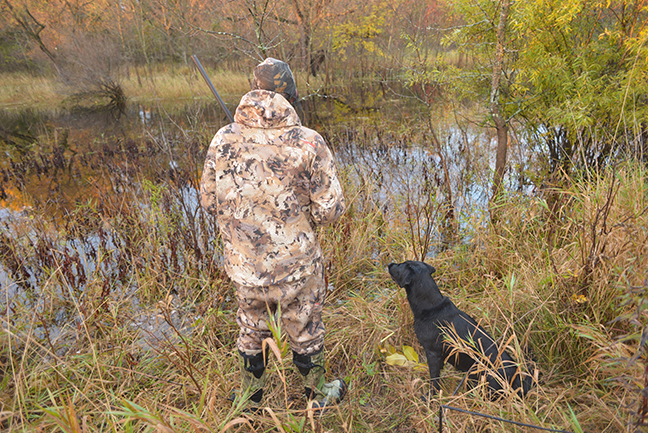
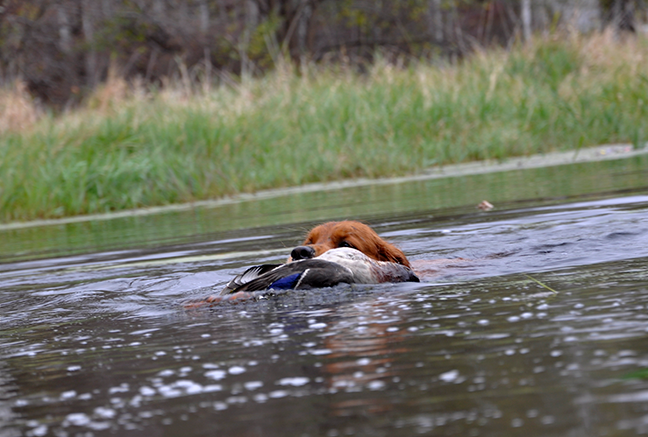
A few years ago, a buddy and I tucked into a wooded berm near some flooded backwaters hoping to catch the last of the wood ducks or a random greenhead passing overhead. We knew the best in our setup was to pass-shoot them as they cleared the treeline and most likely, spotted us. The hope was that it would be too late by the time they figured out their waterhole was being guarded by a couple of dudes holding 12 gauges and an eager black Lab.
Hunting cameraWe did manage a drake and a hen wood duck in the spot, and we also got to witness what not to do duck-wise. Two hunters had slipped into a pond 400 yards from our setup. Instead of tucking into the brush at the edge and trying to hide, they stood at the top of a hill and sent three shots apiece at any duck within a football field's distance of where they stood.
Even if you get out mid-week, you've still got to figure out the best way to hunt your spots on public. The ducks that cruise through the airspace overhead will undoubtedly be a bit cautious, because that's just how they operate. How you should operate is to figure out each spot and where you should be set up. Maybe you can build a sweet blind in the brush, or maybe you've just got to count on getting the jump on them when they finally clear the closest trees and give you those few precious seconds as they try to flare out of the way of your pattern.
Really Camo Up
This is a simple one, but so many of the duck hunters I run into on public land seem to take a half-hearted approach camo-wise. It's as if they either don't know what they are doing, or have given up most of their hope for a decent hunt long before they actually go. Honestly, there is probably a lot of both going on.
Either way, camo up. Use a facemask or face paint and make an attempt to keep hidden if at all possible. Don't give those common-ground ducks the extra advantage of a poorly-hidden or poorly covered hunter unless the spot just doesn't allow for much else. You're working hard to earn the birds in this situation, at least make them work somewhat hard to survive any encounter with you.
Conclusion
Public-land ducks can be tough, but there are plenty of ways to hedge your bets and ensure that you'll have better hunts than most of your competition. You might not limit out on greenheads every time you step out of the truck in the dark, but you'll have a good chance of having a better-than-average hunt and just might end up with some of the most satisfying ducks any hunter can take in any given year, and that's not nothing.
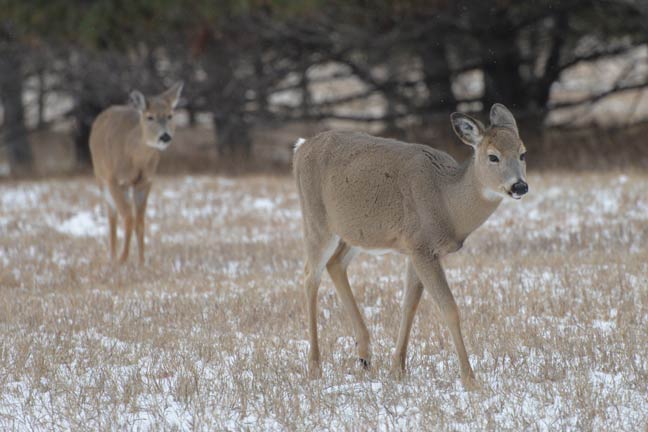
What's worse than that is the fact that the remaining deer have usually had enough of the pressure. At no point in the season are they cagier and less wiling to move during daylight than right after the end of the general firearm's season.
This also happens to be muzzleloader season, and while there is the always the chance to knock down a giant, most of us would be well served to tamp down our expectations and set our standards accordingly.
For this particular hunter, smokepole season is a venison quest. Here are three ways to add some healthy protein to your diet while toting a frontstuffer. Staging City
It would seem that if you're hunting any deer in the herd, setting up on a food source would be the right choice. That's what an awful lot of the whitetail experts will tell you to do. But what if you hunt a place that has been absolutely pounded and the average fawn is savvier than the mature bucks that those hunters protect on premier ground until they are hit-list worthy? Then you need to back off of the food. Naturally, if it's unseasonably cold and the deer are running a calorie deficit, they might charge into a chopped cornfield with plenty of shooting light left. But probably, they won't.
They will, usually, get up from their beds a little early and browse their way slowly toward the food source. This is a bowhunter's strategy adapted to the muzzleloader's world, and it works. The key is to find the thickest, nastiest cover on your property and get as close as you can without making too much noise, or worse, allowing your wind to blow through the cover.
This may seem like an evening-only strategy, but it works in the morning as well provided you've got the right entrance route. Most of the time, you don't need to be more than 100 or 200 yards off of the destination food source to make this work. The Mini-Drive
In general, I'm not a fan of driving deer. That's probably because I grew up bowhunting only, and never took part in the traditional deer drive. I have, a few times, found good situations in which to move some deer in the right direction of a stander during muzzleloader season. A few years ago, while hunting public land in Minnesota, I found a river-bottom that was covered in beds and deer sign. It was a narrow stretch of cover that was too thick to set up in, so I posted my dad on one end and circled wide. Within about one minute of stepping into the thick stuff I heard him shoot. Several does and fawns had trotted by, and one long-nosed doe had made the mistake of stopping 15 yards from him.
If you've got a situation where you can make a mini-push, plan it out and go for it. Just make sure to be quiet, and keep it slow and simple. It doesn't take much to get late-season deer to move, and the goal is to get them up and walking - not sprinting for the next county. Old-School Still Hunting
I love to still hunt. This tactic, which hasn't been popular in a long, long time, is a lot of fun with a muzzleloader. I keep my eyes glued to the weather and if there some fresh snow on the way, or it's going to be super windy, I plan a sneak. Ditto for any rain in the forecast.
Hunting cameraConventional wisdom says you are supposed to move so slow you'll make a sloth look like Usain Bolt, but that's silly. Very few people can do that, and who only wants to see 100 yards of the woods during a three-hour sneak? I try to move slowly, and stop a lot to glass but I don't go so slow that moss grows in my beard. The key to a successful still-hunt is to hunt in a place where you have confidence the deer will be. If you believe any minute you'll spot a doe or buck slipping through the timber, you'll hunt with the wind in your favor and your eyes peeled for a flash of brown.
The first time I did this, I hunted during a crazy storm and spotted a doe and fawn 50 yards from me. I missed her clean and thought my season was over. Later, I crested a ridge and looked at the valley below me. A doe was bedded 35 yards away, oblivious to my presence. It was the only time I've ever shot a whitetail in its bed.
The key to the second shot versus the first, was that I took a careful rest while lying prone on a rock outcropping. The first I shot off-hand, which is always a bad idea. If you're going to go the sneaky route, carry a pair of shooting sticks or try very hard to remember to take a solid rest. The importance of that can't be overstated. Conclusion
If you're meat-poor and own a muzzleloader, you've got options. There are plenty of ways to get a tasty doe or young buck in your sights but just remember, it might not happen on a food source like it's supposed to. You just might have to get a little creative in your tactics.
While it's true hunters today are taking more and bigger bucks than ever, it's also true there are more big bucks around. Certainly, technology has revolutionized the way we hunt and, to some extent, made it easier to be successful, but don't let it lure you into thinking you can kick back, watch trailcam images roll into your smartphone, and then know exactly what's going on in the woods.
Fact is, the most successful whitetail hunters combine proven tactics with modern technology to augment their knowledge. They use woodsmanship to determine if there's a mature buck on their property, where deer feed, and how bucks move; trailcams just let them actually see racks. Here are some old-school tactics to enhance your quiver of new tricks.
Boots on the Ground
Google Earth and apps like OnX are wonderful for seeing the general lay of the land, but nothing beats boots on the ground to learn what's happening below the treetops. But don't just barge in anytime. During fall, you'll spook deer and spread scent; in spring and summer, deer display vastly different behavior than during the hunting season. Therefore, the best time to scout is the day after deer season ends.
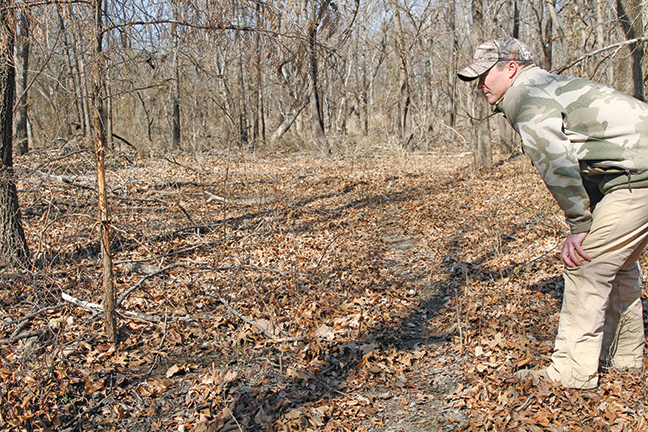
At this time the woods are an open book with a story to tell. It's also one that's easier to read because the foliage is gone so you can see the bigger picture. If there's snow on the ground, even better. This is when you should walk ground to learn subtle ridge trails, draws, hidden pockets of cover, and any contours that dictate deer travel patterns. You'll find obvious signs, like trails, tracks, scrapes, and rub lines from the past rut. This intel will help you determine stand locations for the coming season.
Rub Lines
Hank Tassitano has been killing big bucks on public land since the 1960s. Back then, hunters had only their wits and a weapon to take a buck, which was a rare sight in itself. Tassitano has killed many mature bucks by hunting near rub lines, especially if he can find where two rub lines converge. While there is debate about the value of a rub, Tassitano feels strongly about them. "The size of the rub is generally indicative of the size of a buck," he says. "And while one rub just means that one buck was there once, a rub line usually means a buck routinely works that area."
Trails
Understanding how deer traverse your property is vital. But don't think bucks just wander down trails like does. In October, when bucks transition into breeding mode, mature bucks walk perpendicular to major trails so they can maximize their chances of winding a doe. So even if your trail cam that's placed on a major trail reveals no mature bucks, it doesn't mean none are around. Rather, think like a buck and trust sign. Find places where bucks cruise so they're somewhat hidden yet can cross as many deer trails as possible.
Food Sources
In fall, food sources alone are probably overrated for attracting big bucks. That's because most years there are so many food sources around, including mast, forbes, browse, crops, and fruit, that betting on one carries lower odds than betting on does to attract bucks. Nonetheless, deer must eat. So, you should be an expert on deer food.
Hunting cameraOld-school hunters know what specific trees perennially produce mast and when deer hit them heaviest. If you know that a white oak is raining acorns — something a trailcam can't reveal — strongly consider hunting there immediately. Learn the trees in your area, nearby crops, and what food is most palatable when. This is best learned by spending time in the woods and by observing from a distant vantage point. If you can place trail cams on various food sources, great! Because if you can find the hot food source — especially those in cover — you'll find does and, likely, mature bucks.
Tracks
Tracks are the trailcams of yesteryear. A track made in dirt records when a deer was there and, to an extent, its size. In general, the tracks of mature buck are bigger than all other deer tracks in that area. In my area, for example, a track that measures three inches long is undoubtedly a mature buck, so I notice them. Tracks reveal where a buck has been and where he went.
Rangefinder Trap
Old-school bowhunters were not dependent on laser rangefinders. While rangefinders are revolutionary for long-range shooting, they're also responsible for saving many bucks annually. That's because hunters who have become overly dependent on them often range a close-by buck when they should be shooting. Savvy hunters are accurate to 40 yards or better by using their natural depth perception. All it takes is practice.
Sneakiness
Many modern hunters drive too close to their stands. Some are afraid of the dark; others are just lazy. Fact is, if a big buck is near your treestand — where you'd expect him — and he hears an ATV announce the presence of a human, he's gone. And then you'll wonder why you didn't see him that morning.
Old-schoolers ninja in. Unless you know that deer are absolutely conditioned to living with trucks, say, on a busy ranch, this means parking a half-mile or more from your stand and sneaking in. Use cover and available natural features like creeks or rock ridges to disguise your entry.
Sun and Silhouette
Old-school hunters always factor in the sun before setting a stand. They also avoid silhouetting themselves. While you never want the sun beaming directly in your eyes, just as important is concealing your silhouette as the sun sets at your back. View your stand from a deer's perspective and consider adding foliage behind you.
Wind
"Scent control is huge," says Tassitano. "I'm often surprised to learn that the wind at my stand is doing something different from the predominant wind in the area. So I tie a small feather on a thread and hang it from my bow so I can see how the breeze shifts when I hunt. This teaches me how winds affect certain stand locations so I can more wisely choose where to sit in the future."
October lull: Fact or fiction? I'm still not convinced, though I have on occasion experienced a lull around the third week of October as many others have. But are the deer actually reducing their daytime activity, or are they merely moving it somewhere else? And how do you tell?
Trail cameras can be invaluable in keeping up with how deer make subtle changes in their areas of daytime activity.In many parts of the whitetail's range, October is a month of transition. It begins with warm temperatures. Leaves are still on the trees and deer are just starting to abandon their summer routines. Things are changing, and in order to stay on top of those changes, hunters sometimes need to double their scouting efforts. Fortunately, they can narrow their focus. In general, deer are on their feet during daylight hours for two things — feeding and breeding.
Feeding
This time of year both food availability and preference change. With less need for protein, deer spend increasingly less time in those clover fields you've watched them in every evening. Instead, more time is used for seeking out foods high in carbs, like hard and soft mast. Where I live, the white oaks drop their acorns first, and over a relatively short period. Deer will be on the sweeter, smaller acorns right away, but the bounty won't last much beyond mid-October. Then they move on to the more bitter, but larger red oak acorns. Sometimes the change is subtle and other times it can be quite dramatic.
I once did an early season hunt in Kansas where, based on the landowner's reports, we spent the first few days hunting the edge of soybean fields. But the deer seemed to have disappeared upon our arrival. "A typical October lull," we thought. Then somebody discovered a small grove of persimmons dropping fresh, ripe fruit. One of our party killed a nice buck that evening and I saw at least seven rack bucks the following afternoon. Hunting crops can be hit or miss, as the aforementioned example illustrates. The deer weren't on the beans early, but I've had great luck hunting bean fields in December in Iowa. Corn can be similarly problematic. Hunting in and around standing corn can be tough, but you're going to want to be along the field edge the day after they cut the corn, particularly if it's not a super-efficient machine harvest. These are but a few examples. The deer where you live may go through other diet shifts as need and availability change; and you'll just have to get out there and study. Breeding
Things are also changing with regard to social interaction in October. The transition is slow at first, but the pace picks up as the month rolls on. Bucks open up a few scrapes in early October, but may not revisit them for a week or more. They're waiting for a trigger.
From reams of research we know that in mid to northern latitudes, most does enter estrus around the same time every year — mid-November. There are exceptions, including a couple smaller peaks, one occurring roughly 28 days before peak rut when a few early does cycle and their pheremones incite a sudden increase in buck activity. But if the does move away from where they were in early-October, so will the bucks — especially with love in the air. If you want to be successful you have to keep up with these transitions. Keeping Tabs
One way to try and keep up with changes in deer activity is to be in the woods as much as possible. But no one can be everywhere they want to be every day. You can't hunt every day, and even if you could, you wouldn't want to put that much pressure on one place. Additionally, you can't hunt multiple locations at once. But your trail cameras can. I usually put mine out in late August or early September, mostly to take stock of this year's crop. It will give me a rough idea who is out there and where they hang out, but I know the latter can change over a relatively short period of time, based on the aforementioned factors. It's not at all uncommon for an early-fall spot to go dry. Then I start to move my cameras around and put more out to see where the deer are.
That info is valuable in and of itself, but it can be exponentially more useful when evaluated over time. If you use an app, like ScoutLook, you can plot activity around and between stands from your image files and look for patterns. Over several seasons you may also start to recognize trends using the time and date stamps on your images.
Every situation is different and it may take you several seasons to figure out what's going on in your area. And one year may be different from the next as farmers rotate their crops or natural foods like acorns experience cyclic variations, or environmental conditions like drought alter food availability. But studying your quarry is all part of the fun. The more you learn about the biology and behavior of the animals you hunt, the more enjoyable and successful your efforts will be. Bob Humphrey is a certified wildlife biologist, registered Maine guide and an outdoor writer. He has studied and hunted white-tailed deer for over four decades across North America and is considered a leading authority on whitetail biology and behavior.
Many things aren’t quite as they seem. Flip through a fashion magazine and you’ll see how drastically someone’s appearance can be altered if enough time is spent and enough cash changes hands. From silkier hair to whiter teeth, fuller lips, thinner thighs and so on, the available tweaks are all but endless. Whoever first said life is but an illusion might have just laid down a copy of Vogue.
There’s also a lot of fakery in the hunting world. Generations of waterfowlers have tossed wooden ducks onto the water. And over the past few years, many hunters have begun using turkey decoys. Bird hunters regularly employ such fakes, in combination with calling, because their sharp-eyed quarry can be notoriously hard to coax into lethal range of a thimbleful of pellets.
Mimicking waterfowl and turkey sounds is something with which nearly all whitetail bowhunters can identify. Over the years, innovative deer calls for making grunts, bleats, snort-wheezes and even “roars” have become standard gear. Around the rut, few archers would think of heading afield without some sort of call in their packs. Being able to make sounds that lure bucks into bow range is often a huge advantage.
But what about the visual fakery? Where’s the deer decoy? Most bowhunters have heard of them, and even seen them used on TV hunts, but they aren’t using one themselves. If the thought of decoying has crossed their mind, it evidently was but a fleeting notion.
I don’t claim to be an expert on whitetail decoying. But maybe that’s why I’m pretty sure I can help you. Because while I don’t decoy that often, I’ve still had great success over the years. That tells me you could, too.
The Point of It All
Decoys work for different species for different reasons. Fake ducks and geese are effective because those birds are gregarious and associate other flocks with safe places to feed and rest. A migrating flock might never have seen the pond your spread is on. They’re relying on other birds to tell them it’s a good place to land.
Of course, with a turkey gobbler it’s all about reproduction. Come spring a tom wants to mate, and few things ignite his passion the way the sights and sounds of a breeding opportunity do.
What we’re looking to do with a whitetail decoy is much closer to a setup for turkeys than for ducks or geese. Even during the rut, when many bucks roam widely, they likely know where the food sources and bedding areas are. They don’t need other deer to confirm it. But they do keep their eyes open for other whitetails, whose presence might signal a chance to reproduce.
If you’ve ever had a 3-D buck target mangled by a yard-invading buck, you know how strong the visual attraction can be. When a feisty buck sees what looks like a rival, there’s potential for an aggressive response. What influences whether or not he comes all the way in is more complex. But you need not be a master decoyer to make it work.
As with most other whitetail tactics, entire books could be written on this one. In fact, my friend the late Gary Clancy did just that a number of years ago. But you can have fun decoying, and fill tags with good bucks in the process, if you follow a few simple rules. Hunting cameraOK, “rules” is too rigid a term. Let’s go with “guidelines.” Which means go by them, but be willing to amend or even ignore them as conditions dictate.
Guideline 1: Buck vs. Doe
You might assume that for a rutting buck, a doe standing by her lonesome, waiting for him to join her, would be the hottest ticket to success. Every nerd’s dream at the school dance, right?
That setup can work. In those rare places where the sex ratio is super tight, resulting in a short window of breeding, every doe is getting checked constantly. There, when the time is right a standing/feeding doe decoy is a real attraction. I’ve seen one of these work on mature bucks even without a buck decoy as part of the setup.
But a doe isn’t what I normally use. Most of the time, I feel, you’re better off with a buck decoy. Maybe with a doe in the setup, but often not. I’ll use a lone doe only if I don’t have a buck available.
The main reason I don’t like lone-doe setups is that real does don’t like them. Put a fake doe in a food plot or field and when the old herd doe arrives, she’s likely to freak out. She’ll often stomp around indignantly, then try to lead the rest of her clan back off the plot. If they don’t follow, she’ll become even more agitated. Prepare to listen to “blowing” for a while, as that doe prances around with her tail hairs flared. She just doesn’t like having a strange lady on her turf.
Replace the doe decoy with a buck and things tend to go better. Yes, it’s still a “new” deer, but the matriarch seems to accept that he’s an outsider just passing through. That sort of thing happens during the rut. In many cases, the boss doe quickly calms down and goes on about her business.
You might feel there’s no harm in letting that old doe lead her pack out of the area. You aren’t trying to shoot a doe anyway. But having live deer around can be helpful. They’re living decoys. Yes, too many does present can distract a buck that otherwise might have come to your decoy, but that’s when a little calling and/or rattling can come in handy.
So in most cases, I feel a lone-buck decoy is best. And in most places, a 30-day window starting around Oct. 25 often is the time to try it. After that the libido of most bucks begins to drop, with less aggression displayed.
I know of a few big deer shot over buck decoys right before velvet shedding and of a few others shot deep in the post-rut. I assume a blend of dominance and curiosity explains those approaches, as it’s unlikely they were related to breeding interest. But we can never be sure just what any buck is thinking.
Maybe because it’s often a chore to lug two decoys, few hunters use the deer equivalent of a “spread.” However, I’ve arrowed two bucks while using buck decoys standing over doe decoys. One of the fake does was a full-bodied model, minus legs and antlers, mimicking a bedded doe in heat; the other was a standing cardboard doe silhouette.
Guideline 2: Positioning Matters
Just sticking a decoy in front of a stand is a good way to educate deer. You’ll get educated too, but it could prove costly. So let’s try to get it right the first time.
Does it matter which way a buck decoy faces? I think so. Young bucks often sheepishly approach from the rear, but a big deer rarely will. He wants to intimidate this intruder, not simply gouge him in the ham. So most big bucks will come in from the side or swing around in front. Position the decoy so that either of these approach angles eventually will result in a close broadside shot.
I always have a buck decoy face me. Maybe not straight at me, but within 20 degrees one way or the other. While broadside can work, I’d rather not set it that way. One thing you’ll never see me do is face a buck decoy away from me. Again, I want to encourage a buck to see the decoy, swing around it to make eye contact with it and, in so doing, offer a good shot angle while looking away from me. Folks, that’s about as easy as bowhunting big whitetails ever gets.
How far? I like to put a buck decoy at least 22 yards out. If picking an ideal range, I’d say 25-27. But what matters most is that it be several yards inside maximum comfortable bow range. We can’t control from where a buck will come or which line he’ll take. If he goes a few yards behind the fake and stops, it might be the best shot you’ll ever get. Make sure that distance isn’t too far.
On the flip side, if the decoy’s too close to you, there’s not much room for a buck to get in front of it. If he starts in from somewhere beyond the decoy, with a tight setup he might never turn broadside until he’s right under your tree.
Be extra careful to avoid this “too close” error if you’re on the ground, as I often am on hunts for North American Whitetail TV presented by Quick Attach. Sure, I want a chip shot if I can get one — but at eye level with a mature buck nearly in my lap, all sounds and movements are magnified. I really don’t want him close enough to spit on.
In general, the more open the habitat, the better for decoying. A roaming buck might be hundreds of yards off when you spot him, and at that point he might not yet have spotted your decoy. You can rattle and/or call to get his attention and hopefully get him to see the setup. Once I know he’s seen it and is showing interest, I call very little, if any.
Don’t assume that because a decoy is easy for you to see, it’s just as visible to deer. Not only cover but also small humps or dips in the terrain can hide it from passing bucks. Even an alert deer’s head is much lower than a person’s. When in doubt, I often kneel where I’m wanting to set the decoy, then just look around. If I can’t clearly see a certain corner or other spot from which I think a buck is likely to appear, I’ll assume he couldn’t see my decoy, either.
This decoy’s ears are “alert” because it had been placed over a bedded doe. With a lone-buck setup, lay the adjustable ears back ..Is there such a thing as too open? I’m not sure there is. Naturally, it can help to place the fake so a buck will feel secure in approaching. But I’ve seen how much trouble deer often have picking up decoys in timber or brush. And when their first glimpse is at close range, it can spook them. I’ve watched even big bucks bolt upon spotting decoys they felt were too close for comfort.
Setup and takedown can be tricky. If you put up a decoy long before daybreak, you risk having it approached, and even attacked, as you wait for light. This also can happen if you leave it up too long at last light. So I cut both ends of the hunting day as close as I can.
When decoying a field or plot, I’ll wait until right at legal light to pop my decoy into place, assuming no deer are in sight. In the evening, I’ll use the same approach. (Escaping any feeding area at day’s end is easier if a friend bumps deer away with a vehicle as legal light ends.)
Guideline 3: Scent Solutions
I’ve never found that big bucks insist on getting downwind of decoys, as many do when coming to rattling. Still, I often put scent on the ground, to reinforce the ruse. I’ve had great results with Evercalm, from Conquest Scents — but I wouldn’t hesitate to use an estrus scent or buck urine along with it.
Wildlife photographer Mike Biggs once told me that when he began using decoys in his photo setups, he couldn’t tell handling them with bare hands was a negative. He made no effort to keep his decoys clean and still got a lot of great photos of big, hunted bucks coming right up to them. My experience has been similar. Of course, there’s no advantage to pushing your luck on human odor. You can clean a decoy with ozone, a spray-on odor neutralizer or even a garden hose.
Guideline 4: Don't Overdo It
Next to spot-and-stalk, decoying is the most exciting archery tactic of all. Once you’ve seen it work, I think you’ll be hooked. But that’s why I must caution you: It can take serious self-control to keep from burning out a spot.
As with rattling and calling, constant decoying in one location tends to grow less effective. Yes, often we’re trying to intercept bucks roaming a wide area, and that can extend the life of a setup; the buck you fool today might have been two miles away yesterday. But over time, resident whitetails grow leery of seeing the same “frozen” deer standing in the same spot. The young buck you educate to a decoy in 2018 could be the giant that keeps his distance in 2020.
Last Nov. 10, I decoyed a big 9-pointer into crossbow range on my Missouri farm. He came in from an unexpected angle, and grass blocked any shot before he reached the Dave Smith Posturing Buck. He then bumped off a few steps but didn’t bolt. At that point I was able to get on him with my TenPoint, and within seconds it was lights out.
I doubt that buck had ever seen a decoy. Why? Because nobody had used one on the farm since 2009. The deer I shot hadn’t even been alive then.Find a place where deer haven’t been decoyed much. Should you have an encounter there but not fill your tag, maybe tweak the setup or move on to another group of deer. At a minimum, rotate stands often. Try to keep things as fresh as possible for as long as possible.
If you have a big piece of land to hunt, or a number of smaller ones, in theory you can decoy a lot. But if you’re hunting one small property, take care to limit the technique to the times, places and weather conditions in which you feel it’s really likely to pay off. That won’t be every day, and it won’t be every stand. But it doesn’t have to work every time.
In Conclusion
Some bowhunters still see decoys as gimmicks or too much trouble to bother with. But a decoy is a valuable tool. For the time, effort and dollars invested, no other tactic yields as many good shots. Around the rut, I’d far rather go bowhunting with one arrow and a decoy than a full quiver but no decoy.
Figuring out what the conditions call for is the art of all deer hunting, not just decoying. The details vary by time, habitat, weather, hunting pressure and more. But decoying isn’t just some fad. It works. So if you’ve been on the fence about trying it, hop over to the “unreal” side of whitetail bowhunting. See for yourself what all the buzz is about.
If you expect to toss some seeds on the ground and watch them grow into a big-buck Shangri-la come November, you might as well just throw some cash in the trash, too. Because if you don't prep your ground before planting at the right time, you'll just be wasting time and money. Trouble is, most of us aren't farmers — we don't know what to plant or when to plant it. We're hunters who want to improve the herd's nutrition and maybe take a homegrown buck next fall. So here are the basics about what you need to know for sowing a successful food plot.
Steve Scott is vice president of the Whitetail Institute and an expert on food plots. His company makes numerous products to attract, hold, and nourish deer. The Alabama-based firm also provides consumers with free info on how to best grow food plots in their particular regions. What follows is Scott's advice, given in step-by-step form so you won't forget a key date. After understanding the concept and the order of events for food plot planting, go to whitetailinstitute.com to find out when to plant in your area. And don't hesitate to call for custom advice.
January — March
After the fall hunting seasons end but before spring, research and decide what type of crop you wish to plant. This will dictate your to-do calendar.
Scott keeps it simple for beginners by recommending one of two types of forages for deer: a fall/winter annual blend like his company's Pure Attraction that contains oats, winter peas, and brassicas; or a perennial crop like clover that's planted in the spring.
The fall/winter blends are planted in late summer/early fall. Most annuals are designed to top-out in fall and winter to attract and hold bucks and to be hunted over. Seed blends are ideal because they hedge against certain types of seeds not doing well in your soil; plus, they give deer variety, so there's always something sprouting in fall that's palatable. Assuming it all doesn't get eaten, fall blends provide nutritional value to deer all winter long.
Perennial crops like clover provide nutritional value during the spring and summer months. Unless you live in extreme southern states, they're generally not intended to be hunted over. Their role is to help whitetail does during gestation, thereby creating healthier fawns, and they can enhance antler growth in bucks. Clover is best planted in spring; it matures in spring and summer.
For the best of both worlds, hunters can choose a mix of perennials and annuals by planting a big plot and halving it down the middle or by planting multiple plots. Choose a forage or forages based on your goals.
Any time before spring starts to green up, choose ground for your plot or plots and decide on size. Your time, budget,
and machinery along with how many deer you hope to feed and for how long should be deciding factors. To determine plot locations, consider stand location, predominant winds during hunting season, access to treestands, proximity to roads, and ground quality. Obviously, if you select a tract that's laden with rocks, those rocks will need to be removed first for best results. So be smart.
March — May
As soon as the ground thaws and grass starts greening, take a soil sample and send it to your county extension office for analysis or get a kit from the Whitetail Institute and return it. Also, include your crop selection information with it. This is the single most important thing you can do to ensure great results. The test will reveal your soil's pH. The analysis will instruct you in how much lime, if any, to spread over your plot before planting to make the pH ideal. The analysis also will tell you what type of fertilizer you'll need.
March — July
Purchase your products, including lime, herbicide, seed, and equipment, such as spreaders and sprayers. While most crops can be purchased cheaply at your local feed store or co-op, the advantage of paying more for specialized products from firms like the Whitetail Institute, Tecomate, or others is that the seeds are engineered to have a higher nutritional content for deer. No doubt, many hunters do just fine buying locally.
Once you have your equipment, during the spring, spray, brush hog, and/or disc your plot to eliminate grass and weeds. A Roundup-type herbicide is best.
March — June
After the grass dies, disc the plot so that three to four inches of topsoil is broken and is loose for planting. This is best accomplished with a heavy tractor and disc for new plots, but it can be done with an ATV and implements with many passes.
As soon as possible after discing, apply the appropriate amount of lime. Lime needs time to lower the soil's pH. Every month or so after discing and liming — but before planting — disc, spray, and break up the soil routinely to keep grasses from reestablishing.
From March to July, disc your plot to break up grasses and weeds. Then disc the plot again so the soil is loose for planting.
March — July, perennials; August — November, fall/winter annuals
Plant your crop. Try to plant when the soil is moist and rain is expected, but always plant within your area's suggested time window, which can be found at whitetailinstitute.com. Most seed types can be broadcast with a hand, push-type, or mechanized seed spreader.
Immediately after broadcasting, drag the plot. If you have a cultipacker, use it to lightly bury them. Note that the larger the seed, the deeper it should be buried.
Immediately after dragging, fertilize the plot.
March — September
Begin placing stands. Consider placing two or more stands — one on the south side of the plot and one on the north, with corresponding access avenues for north and south winds.
September — November
Wait. If you're religious, pray for rain. Then watch your food plot pop up and the deer flock to it.
Books have been written, stories have been told and lies have been concocted in an effort to identify the perfect North American big game cartridge. Many believe it's the cartridge they've chosen, others think specific cartridges must be matched to specific animals, and some claim perfection does not exist. When it comes to rifle cartridges, perfection may not exist but we should still be able to make a faultless choice given the vast options we have.
But How?
First, we should define the parameters of determining the perfect North American big game cartridge:
The cartridge should be able to push a bullet fast and flat enough to limit trajectory as much as possible.
The bullet should provide enough penetration to pass through the vitals of any animal we shoot, while expanding to increase tissue destruction.
Ideal external and terminal ballistics should be provided without excessive recoil.
The cartridge must fit in a repeating rifle compact and light enough to carry all day, with a reasonable magazine capacity.
Now, for the specifics: Trajectory (external ballistics)
An 8-inch kill zone is a reasonable average for North American big game animals. From a trajectory standpoint, our cartridge should allow you to hold in the center of this kill zone out to 300 yards and still hit it, even in a moderate cross wind. Penetration/Expansion (terminal ballistics) Given reasonable shot angles, for a bullet to pass through the vitals of all North American big game animals, from pronghorn to moose, it should be capable of penetrating 18 to 20 inches in 10 percent ordnance gelatin. To maximize tissue destruction the bullet should also expand between 1.5 and 2 times its original diameter. Recoil
How hard a rifle kicks is subjective and somewhat dependent on rifle design. That said, most hunters find that a rifle/cartridge combination producing a free recoil energy of more than 25 to 30 pounds is uncomfortable to shoot. Cartridge/Rifle Size Long cartridges increase rifle length and weight. Fat cartridges diminish magazine capacity. Long and fat cartridges do both. And some magnum cartridges need long barrels to really be magnums. What's ideal? Eight pounds is a good target weight for a field ready rifle and 40 inches or less is a reasonable length. You must shoot once and a coup de grace might be needed. You also might miss, so you need at least three shots. And, since you never want an empty rifle, capacity must be four or more.
Is there a cartridge that fits these specifications? The first that comes to mind is the .308 Winchester. It will work splendidly on whitetails — I've done that — and its sufficient for moose — I've done that, too. It's compact and allows for a properly sized rifle with an ample magazine capacity. With good bullets, 20 inches of penetration is easily obtained, even with 2x bullet expansion. When properly zeroed it will allow you to hold dead on out to just the other side of 300 yards. And, in an 8-pound rifle it will generate less than 20 ft./lbs. of free recoil energy.
Your search is over.
But what about the big, mean and nasty brown colored bears you say? We're talking about hunting cartridges, not charge stopping, dangerous game cartridges. If your plan is to shoot a charging grizzly at 20 paces you do not merely need the perfect North American big game cartridge, you need a specialized, dangerous game cartridge and rifle setup. If you hope to hunt and then shoot a big bear at a reasonable distance, the .308 will kill him just like it will kill an elk. But what about shooting at really long range you ask? Look, if you want to shoot big game animals out beyond a quarter of a mile with regularity and success, again you'll need a specialized rifle and cartridge. This would not be a rifle to tote into the timber with the hopes of jumping a whitetail buck.
What we're talking about is the perfect, general-purpose cartridge/rifle combination, a single solution for all your North American hunting needs. One of the greatest firearms experts and teachers conceived this combination as early as 1966.
Col. Jeff Cooper originated the scout rifle concept just for this purpose, citing it sufficient for animals weighing up to 1,000 pounds. For this rifle he selected the .308 Winchester cartridge. You might opine the .308 not adequate for hunting all of North America and you have a right to your opinion. I do not share it. I've seen the .308 employed with sensational success in North America and Africa on animals large and small.
We really don't need a modern treatise on this subject to discover the truth. Long before Cooper, in his 1927 book, Wilderness Hunting and Wildcraft, Townsend Whelen wrote that the best big game cartridges were the "'¦6.5 mm Mannlicher, .270 Winchester, 7mm Mauser and .30-06 U.S. Government."
Practically speaking, these four cartridges are ballistically identical to the more compact .308 Winchester, which was not invented until 1952. Yes, there are even more modern cartridges and they offer similar or improved ballistics. But none of these more modern cartridges make big game animals harder to kill.
Hunters seem to have figured all this out the same way Whelen did — through field experience, though without stopping power formulas and gun writer drivel. According to a leading ammunition company, last year the most popular big game cartridge sold in North America was the .308 Winchester.
However, we've left out a very important element of big game cartridge anatomy. Many hunters develop an unbreakable and sometimes unreasonable bond with certain cartridges. That relationship can be very important to the overall enjoyment of the hunt and without enjoyment, hunting is just hard grocery shopping. Your perfect North American big game cartridge will and should be one you like. For that reason cartridge anatomy arguments will continue as long as there are campfires. Which cartridge gets your vote as the perfect North American big game round?



 Given reasonable shot angles, for a bullet to pass through the vitals of all North American big game animals, from pronghorn to moose, it should be capable of penetrating 18 to 20 inches in 10 percent ordnance gelatin. To maximize tissue destruction the bullet should also expand between 1.5 and 2 times its original diameter.
 Long cartridges increase rifle length and weight. Fat cartridges diminish magazine capacity. Long and fat cartridges do both. And some magnum cartridges need long barrels to really be magnums. What's ideal? Eight pounds is a good target weight for a field ready rifle and 40 inches or less is a reasonable length. You must shoot once and a coup de grace might be needed. You also might miss, so you need at least three shots. And, since you never want an empty rifle, capacity must be four or more.

